

Roof sheeting
We supply roof sheeting for warehouse, factory and shed roofs, with practical options for industrial, commercial and agricultural work. Orders can be supplied with cutting and related steel items where required, and we can also assist with installation on suitable projects.
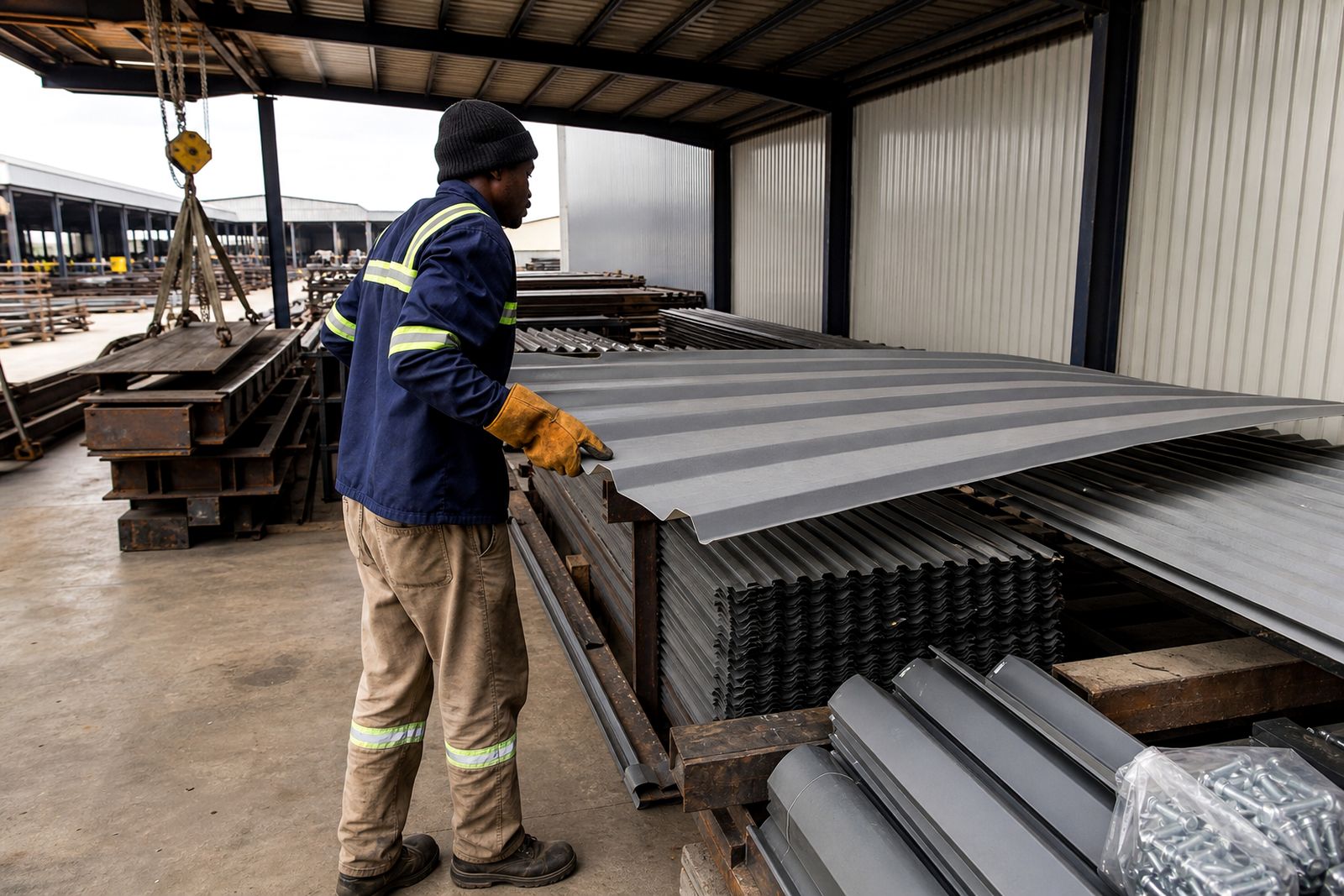
What roof sheeting is used for
Roof sheeting forms the weather skin over purlins or roof members on steel buildings. It is commonly used on warehouses, factories, farm sheds, workshops, storage buildings and similar structures where a fast covering method is needed with predictable fixing centres and sheet coverage. On many sites in Gauteng and across South Africa, sheeted roofs are chosen because they suit straightforward steel frames and can be installed in stages as the structure goes up.
For most projects, the right sheet profile depends on roof pitch, purlin spacing, expected wind exposure, building width and whether insulation or translucent light sheets must be included. In coastal areas, moisture and salt in the air matter more, while inland sites often focus on heat, dust and summer storms. We help customers match the sheeting to the building use rather than just choosing the cheapest profile.
Sheet profiles, lengths and practical limits
Roof sheeting is available in different profiles and thicknesses to suit light duty and heavier duty roofs. Effective cover width changes by profile, so the roof area on plan is not the same as the sheet quantity required. Long sheets can reduce side laps and speed up fixing, but they also need proper handling on site and enough space for unloading.
- Common material thicknesses are usually in the light to medium roofing range such as 0.47 mm and 0.53 mm, subject to project requirement.
- Sheet lengths are cut to order within handling and transport limits.
- Profiles may suit low to moderate roof pitches, but the minimum slope must match the profile and drainage layout.
- Long runs may need expansion consideration, especially on wide industrial roofs.
- Coverage per sheet depends on the profile, side lap arrangement and any end laps.
Working limits matter. Very wide purlin spacing, shallow falls, high wind corners and roofs carrying extra traffic need closer checking before supply. If a building has heavy plant mounted on the roof, regular maintenance traffic, or long unsupported sheet spans, standard light roof sheeting on its own may not be enough. In those cases we may recommend adjustments to purlin centres, sheet thickness or profile selection. It saves trouble later, and it avoids oil canning, ponding or loose fixings.
Where roof sheeting suits and where it does not
Sheeted roofing suits many steel buildings because it installs quickly and works well with standard portal frames, trusses and purlin systems. It is a practical choice for distribution buildings, light manufacturing spaces, machine sheds, feed stores and general purpose agricultural covers. It also suits extensions and re-roofing work where the existing frame can accept the new sheet profile and fixing pattern.
- Good for warehouses, factories, workshops and farm sheds.
- Suitable for many church halls and assembly buildings where the roof pitch and frame spacing are correct.
- Useful for replacement roofs where corroded sheeting must be removed and new sheets fitted to the existing steelwork.
- Often combined with ridge flashings, barge flashings, gutters and translucent roof lights.
It is less suitable where the roof pitch is too low for the chosen profile, where there is constant chemical fallout, or where a roof must support regular foot traffic without proper walkways. Buildings close to the coast or in corrosive process areas may need more careful material choice and maintenance planning. On some older structures, the issue is not the sheeting at all but the purlins, sag rods or alignment. If the base structure is out the new sheets will show it.
Site and installation requirements
Good sheeting starts with a sound supporting frame. Purlins should be aligned, correctly spaced and fixed firmly before sheets arrive on site. Roof slope, overhangs, gutter positions and ridge details should be settled before cutting lengths, because site changes after manufacture can lead to waste. For large roofs, unloading and lifting method should also be planned in advance, especially if access is tight or if the site cannot take long delivery vehicles.
Installation needs the right fasteners, closures and flashings for the profile being used. End laps and side laps must suit the slope and weather exposure. On taller buildings and open sites, wind conditions can slow down handling, and sheets should not be left loose on the frame. During periods of power cuts, many contractors plan fixing sequences around available lifting equipment and site lighting so work does not stop halfway through a roof section.
- Confirm purlin centres before ordering.
- Allow clear access for offloading long sheets.
- Provide final roof pitch, sheet direction and flashing details.
- Check whether insulation, roof lights or ventilation openings are required.
- Make sure rainwater goods and downpipe positions are coordinated early.
Care, storage and service life
Roof sheeting should be stored off the ground on a dry, level base and kept ventilated if it cannot be installed immediately. Bundles left wrapped in damp conditions can stain or trap moisture, especially during summer rain. On site, sheets should be handled carefully to avoid edge damage and scratching of the protective finish.
Once installed, a sheeted roof needs periodic checks. Leaves and debris should be cleared from valleys and gutters, fixings inspected, and damaged flashings repaired before leaks spread to insulation or stock below. In dusty industrial areas, regular washing can help maintain the finish. Coastal humidity shortens maintenance intervals, while inland roofs may suffer more from thermal movement and storm debris. Small issues left unattended become bigger ones quickly, thats usually how premature corrosion starts.
What to send with your enquiry
To quote accurately we need the basic roof information, not only the floor area. Roof length, building width, pitch and support spacing all affect sheet choice, quantity and fixing detail. If you have drawings, roof layouts or a simple marked-up sketch, send those through the contact page enquiry form with any site notes. We can then advise whether standard cut lengths will work or whether special detailing is needed.
- Project location and building use.
- Roof plan size in metres and roof pitch.
- Purlin spacing and steel frame type if known.
- Preferred sheet thickness or existing sheet profile for matching.
- Whether you need flashings, gutters, ridge caps, insulation or roof lights.
- Whether supply only is required, or supply with installation.
If the job involves re-roofing, include photos of the current roof and note any leaks, corrosion or sagging members. If the project is a new warehouse or shed, let us know the expected wind exposure and whether municipal submission drawings already exist. A clear enquiry saves time for both sides and helps avoid ordering the wrong profile or length.
What our Steel Structures customers say
Verified Google reviews
Questions we get asked
Can you cut roof sheeting to my required length?
Yes. Sheets are generally supplied cut to order, provided the requested lengths are practical for manufacture, transport and safe handling on site.
Do you supply only, or can you also install?
Both options are available depending on the project scope and location. Tell us whether you need supply only or supply with installation when you enquire.
What information do you need for a roof sheeting quote?
Send the project location, roof size in metres, pitch, purlin spacing if known, preferred thickness or profile, and whether you need flashings, gutters, insulation or roof lights.
Also worth a look
Ask for a quote
Send your building type or steel requirement, approximate dimensions and project town through the form, and the team can respond with a quote for supply, fabrication or erection.
Open the contact form