Corrosion protection for steel structures
Steel lasts a long time when it is protected properly. Here is how to choose between primer, paint systems and galvanising, and how to look after the coating once the building is up.
Start with the environment
The right protection depends on where the steel will live. A dry warehouse in Gauteng is a very easy environment. A farm shed near fertiliser stores, a building at the coast or a structure near a mine is much harder on steel.
Think about moisture, salt, chemicals and how often the steel will be wet. That tells you how much protection it needs.
- Dry inland interiors: mild conditions
- Open farm buildings: moisture and fertiliser dust
- Coastal sites: salt in the air
- Mines and plants: chemicals and abrasion
Primer and paint systems
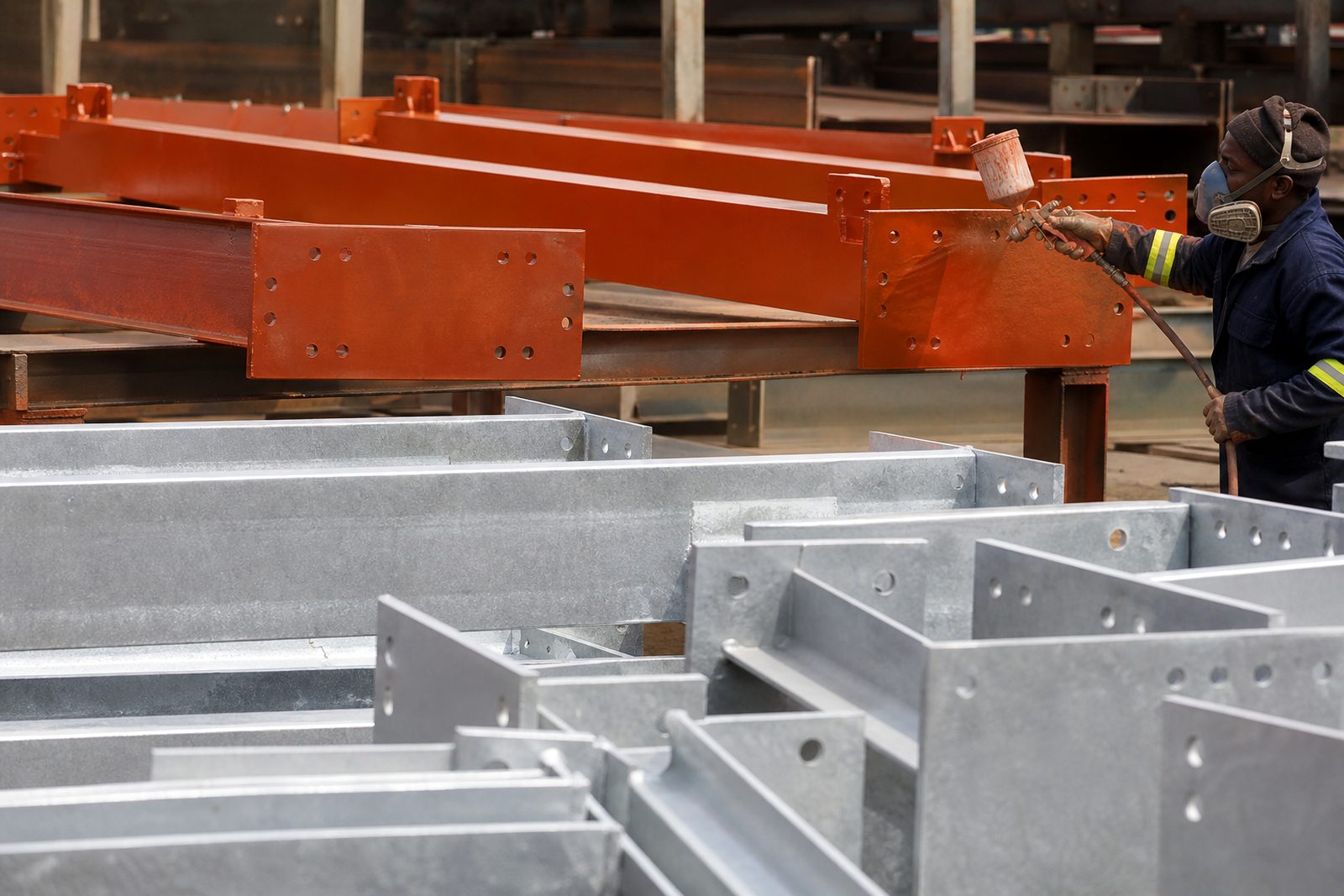
For most interior steel in dry buildings, a good primer and a top coat give reliable protection. The steel is cleaned before coating so the paint bonds properly.
For harsher conditions, multi-coat paint systems build up a thicker film. Colour can also be chosen to match the building, which matters on visible steel in churches, showrooms and offices.
- Surface cleaning before any coating
- Primer for interior steel in dry buildings
- Multi-coat systems for harsher environments
- Top coat colour to suit visible steel
Hot-dip galvanising
Galvanising dips the finished steel in molten zinc, coating every surface, inside and out. It is tough, handles knocks well and protects edges and corners that paint can miss.
It suits exposed steel, coastal sites, farm structures and anything that will be hard to repaint later. Galvanised steel can also be painted afterwards with the right preparation if a colour is needed.
- Covers every surface including hollow sections
- Good resistance to knocks during erection
- Well suited to exposed and coastal steel
- Can be painted later with proper preparation
Details that stop rust starting
Good detailing matters as much as the coating. Steel that traps water or dirt will rust first, whatever the paint.
Drain holes in hollow sections, gaps that let water run off, and base plates that sit clear of standing water all help. On site, any coating damaged during lifting or bolting should be touched up straight away.
- Drain holes in hollow sections
- Avoid pockets that trap water and dirt
- Keep base plates clear of standing water
- Touch up damaged coating after erection
Looking after the coating
Walk around the building once a year. Look at column bases, gutters, the lower parts of walls and anywhere water collects. Small rust spots are easy to clean and touch up before they spread.
Keep gutters and downpipes clear so water does not overflow onto the steel, and wash off fertiliser or salt build up where you can.
Choosing for your project
If you are unsure, tell us the site location and use. We can suggest a coating system and price more than one option, so you can weigh first cost against long term care.
For structures already standing, we can also advise on cleaning and recoating as part of modification work.
What our Steel Structures customers say
Verified Google reviews
Questions we get asked
Is galvanising needed for an inland warehouse?
Usually not. A good primer and paint system is normally enough for dry inland interiors. Galvanising is more common for exposed, coastal or farm steel.
Can old rusty steel be recoated?
Often yes. The rust has to be cleaned off properly first, then a suitable primer and paint system applied. Badly corroded members may need replacing.
How often should I check my steel building?
A yearly walk-around is a good habit, plus a look after big storms. Catching small rust spots early keeps repairs simple.
Also worth a look
Ask for a quote
Send your building type or steel requirement, approximate dimensions and project town through the form, and the team can respond with a quote for supply, fabrication or erection.
Open the contact form