

Steel fabrication
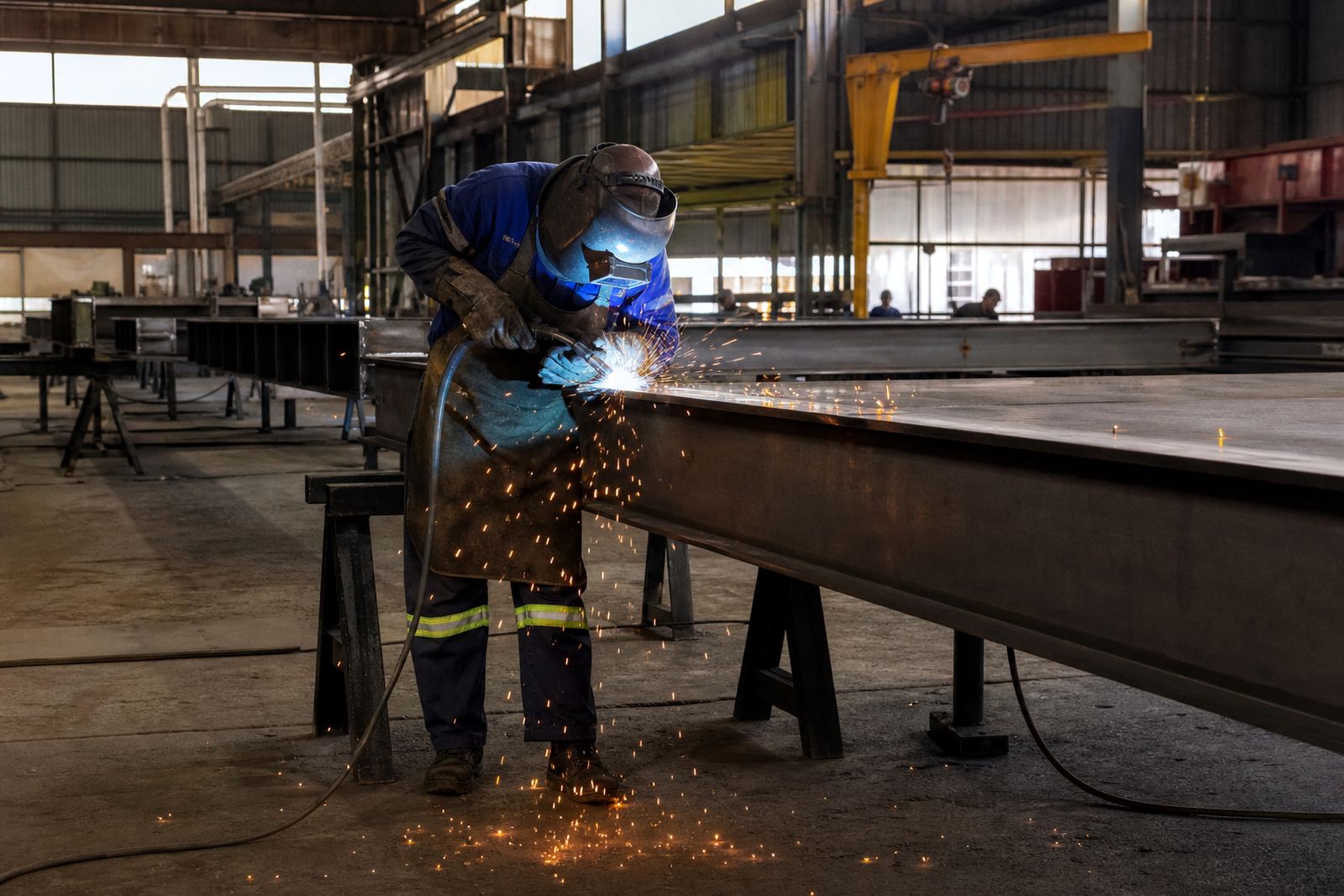
We fabricate structural steel members in our Germiston workshop for industrial, commercial and agricultural projects across South Africa. The service covers cutting, drilling, welding, plate work and trial assembly so steel arrives on site ready for practical erection.
What Our Steel Fabrication Service Includes
Our steel fabrication service covers the workshop preparation of steel members used in churches, factories, warehouses, farm sheds, aeroplane hangars, mine structures and alterations to existing buildings. We work from approved drawings and fabrication details to cut sections to length, prepare connections, weld assemblies and mark items for handling and erection. Where a project needs supply only, we can fabricate members for collection or delivery. Where site work is also required, fabricated steel is prepared to suit the erection sequence.
The focus is practical output that suits South African site conditions, transport routes and installation methods. This includes attention to member lengths for delivery vehicles, bolted connections for quicker fitting on site, and sensible detailing for maintenance access where needed. For coastal projects, corrosion protection requirements can be discussed early so the steelwork matches the site environment.
- Cutting of beams, columns, channels, angles, tubing and plate
- Drilling, punching and hole preparation for bolted connections
- Welding of brackets, cleats, trusses, frames, stairs and platforms
- Base plates, gussets, stiffeners and connection plate fabrication
- Item marking, bundling and loading for transport
- Trial assembly of selected components where fit-up needs checking
Workshop Process Step by Step
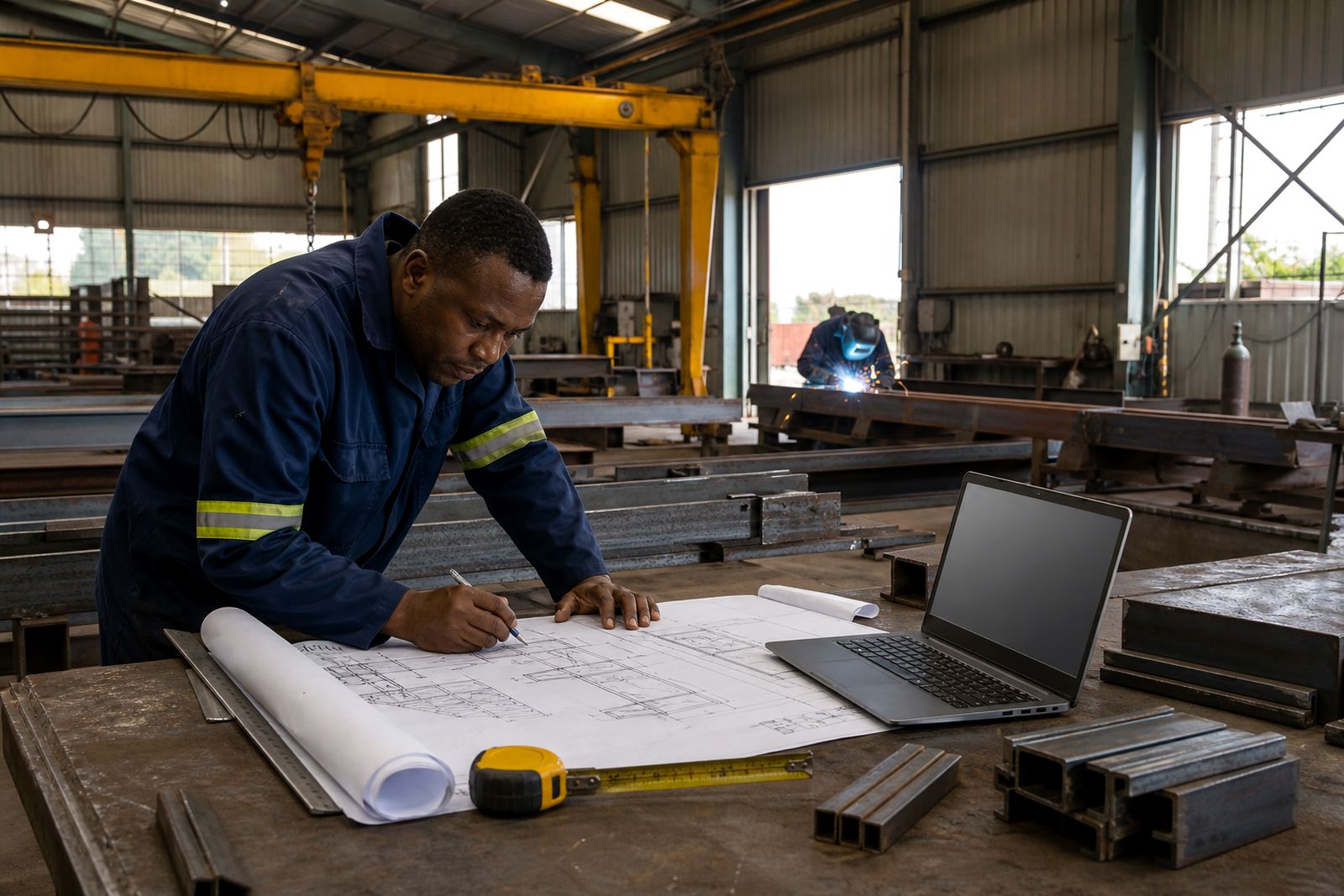
Each job starts with a review of the structural drawings, member lists and connection details. We confirm section sizes, plate thicknesses, hole positions and any special site requirements before material is cut. If a drawing needs clarification, it is better to resolve that before fabrication starts rather than lose time later on site.
Material is then issued for cutting and preparation. Members are cut to size, ends are prepared where required, and all holes, cleats and plates are set out according to the fabrication drawings. Assemblies are checked during fit-up before final welding. Once completed, components are cleaned, marked and sorted for dispatch. Larger jobs are usually packed in erection order which helps the site team keep moving.
- Drawing review and material take off
- Cutting of sections and plate to required lengths and sizes
- Drilling, coping, notching and edge preparation
- Fit-up and dimensional checking
- Welding and assembly
- Final inspection, marking and loading
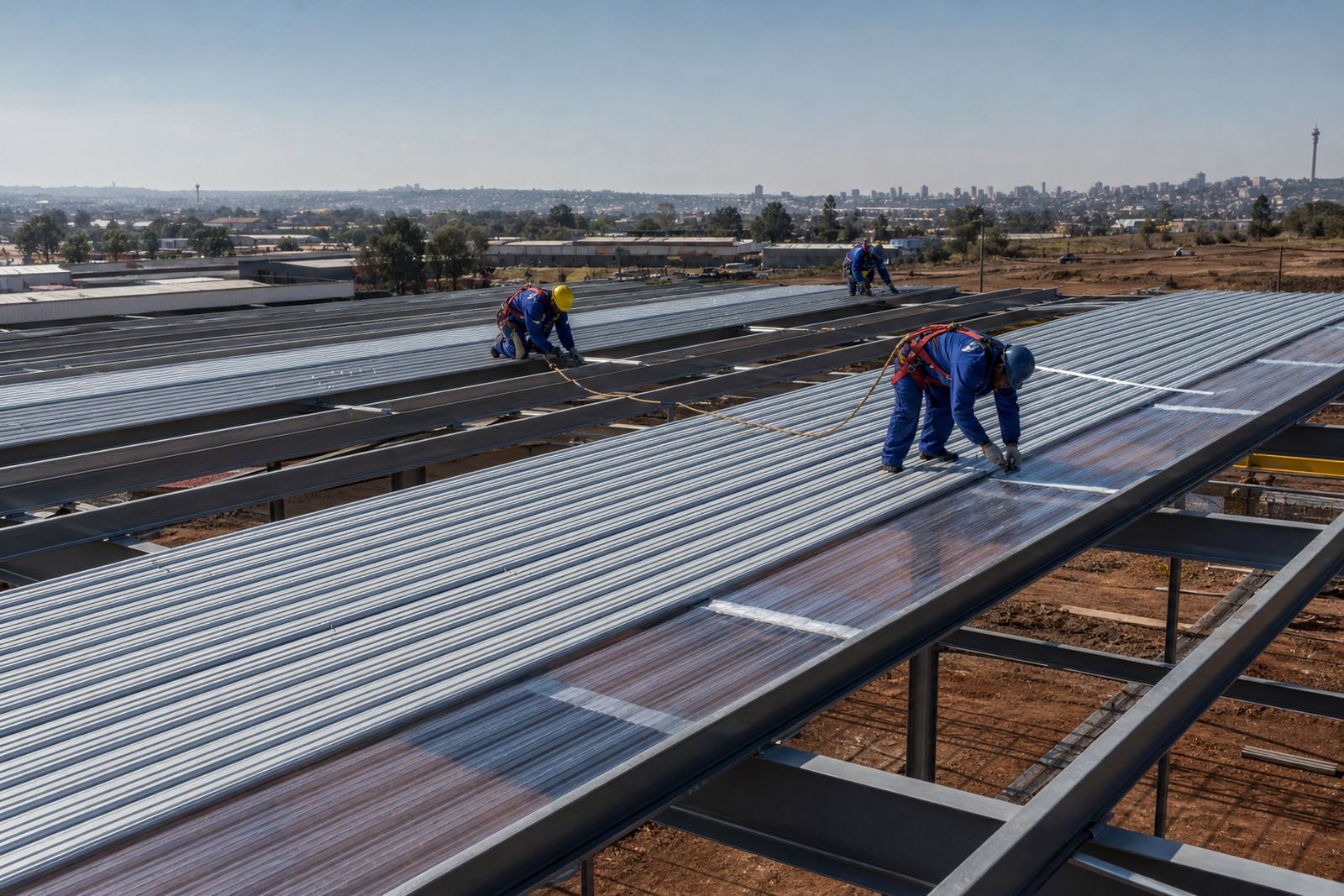
Where a project includes roof sheeting supports, mezzanine members or modification steel for an existing structure, those items are usually separated clearly so the installer can identify them quickly. It saves time on a busy site and helps avoid mix ups.
Information the Client Must Prepare
To keep fabrication moving properly, the client should provide clear project information from the start. The most important items are approved drawings, intended use of the structure, site location and any programme requirements. If steel will tie into an existing building, dimensions from site must be checked carefully before fabrication starts. Small measurement errors on existing work can create unnecessary delays later.
For projects in Gauteng this is usually straightforward, but for remote sites or mines the delivery and handling plan also matters. Access for long members, offloading equipment, and whether steel must arrive in phases should be agreed early. If galvanising, primer coats or roof sheeting interfaces are required, that should be stated up front as it affects sequence and lead time.
- Approved structural and fabrication drawings
- Site location and delivery access details
- Required finish such as bare steel, primer or other specified protection
- Erection sequence if steel must be delivered in stages
- Confirmation of any existing steel to be matched or modified
- Special requirements for coastal humidity, corrosive sites or municipal compliance
Typical Fabrication Specifications
We fabricate from common structural steel sections and plate used in building work across South Africa. This includes universal beams, columns, channels, angles, square and rectangular tubing, lip channels and flat bar, depending on the structural design. Plate components such as base plates, gusset plates and cleats are prepared to the specified thickness and hole pattern.
Member sizes and connection details vary by project, so final fabrication follows the approved drawings rather than a standard pack. As a general guide, typical work may include plate from 3 mm upward, structural tubing in a range of wall thicknesses, and rolled sections in lengths that suit transport and erection. Weld size, hole diameter, anchor bolt setting details and tolerances are all determined by the engineer's requirements and the practical use of the structure. If a project includes stairs, handrails or mezzanine framing those items are fabricated to match the load and layout required, not guessed on site.
How Pricing Is Worked Out
Fabrication pricing is usually based on a combination of material type, tonnage, labour content, complexity and finishing requirements. A simple run of cut beams with standard drilled connections costs differently from a job with many welded assemblies, heavy plate work or irregular modification pieces. Transport, loading method and whether fabrication must be split into urgent batches can also affect the quote.
We also look at the quality of the information supplied. Clear drawings and complete schedules allow cleaner estimating and fewer provisional items. Where site measurements are uncertain or existing steel needs careful matching, extra checking time may be allowed for. For that reason it is best to send the latest approved information through the enquiry form so we can review the scope properly and issue a quote based on the actual work required.
- Section sizes, plate thicknesses and total steel mass
- Number of cuts, holes, welded joints and assembled items
- Complexity of connection details and fit-up time
- Surface preparation and protective coating requirements
- Packaging, delivery distance and offloading arrangements
- Programme pressure and phased dispatch requirements
Aftercare and Site Support
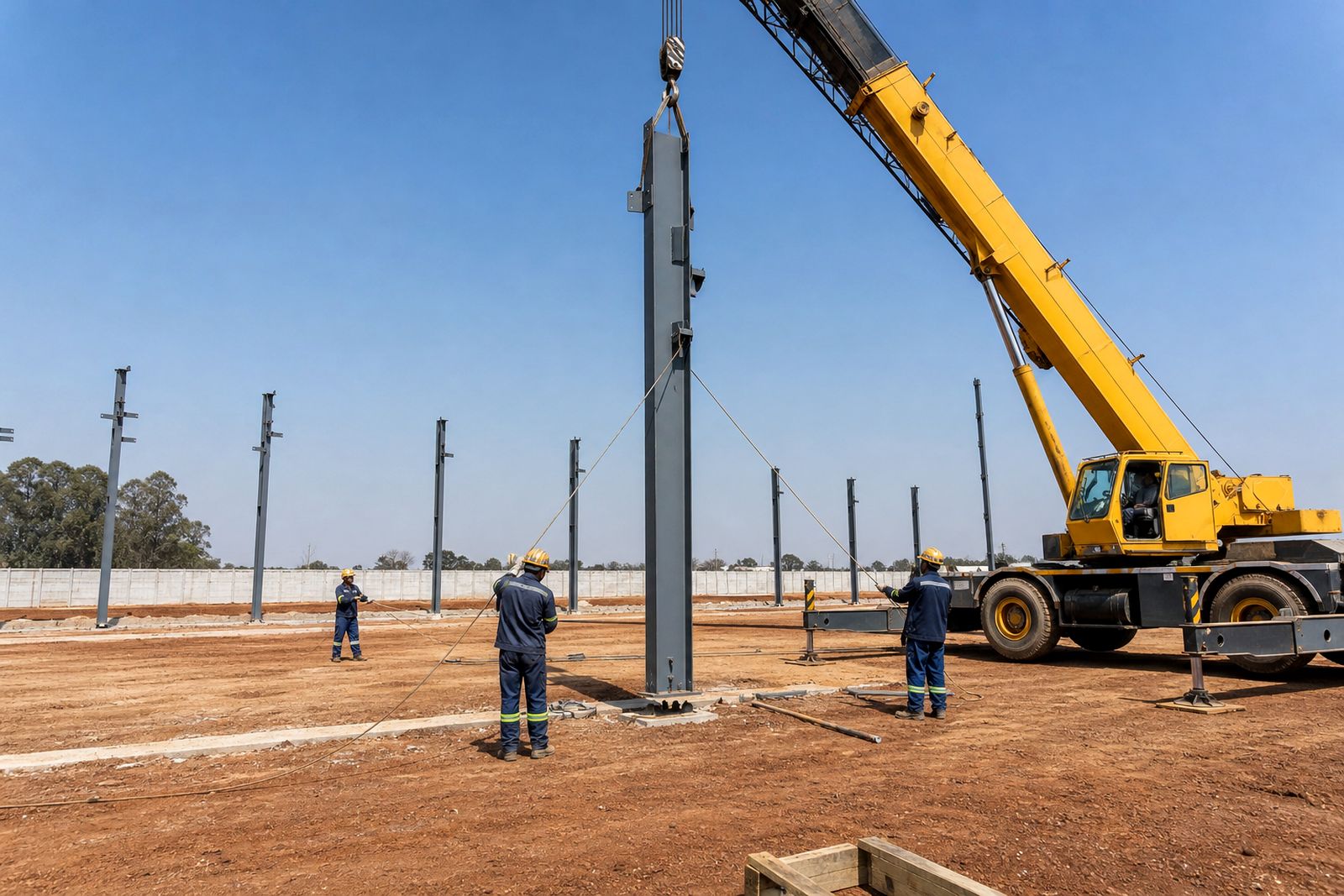
After fabrication, we remain available to assist with practical questions about identification, erection sequence and matching fabricated components to the drawing set. If the project includes our site erection service, the workshop and site teams coordinate so any minor adjustments are handled in an organised way. On supply only work, components should be checked on arrival and stored off the ground on level packing to avoid damage before installation.
If steel is delivered to a site that experiences frequent power cuts, we recommend planning crane time, welding equipment and access around those interruptions to avoid slowdowns. Any visible transport damage, missing marks or unexpected site conditions should be reported as soon as possible so corrective action can be arranged. For existing buildings, no site cutting or welding should be done without checking against the approved structural details first, that point gets overlooked more often than it should.
For long term performance, fabricated steel should be erected square, kept dry before cladding where possible, and maintained according to the finish specified for the project. In coastal and high moisture areas, protective systems need closer attention than inland jobs.
What our Steel Structures customers say
Verified Google reviews
Questions we get asked
Can you fabricate steel from our engineer's drawings?
Yes. Fabrication is typically done from approved structural and fabrication drawings, member schedules and connection details supplied for the project.
Do you handle small alteration work as well as full building steel?
Yes. We fabricate steel for full new structures as well as modification work such as extensions, additional bays, replacement members, stairs, platforms and mezzanine framing.
Can fabricated steel be delivered outside Gauteng?
Yes. Projects are handled from Germiston and supply can be arranged for sites across South Africa, subject to access, loading and delivery requirements.
Also worth a look
Ask for a quote
Send your building type or steel requirement, approximate dimensions and project town through the form, and the team can respond with a quote for supply, fabrication or erection.
Open the contact form