

Site erection
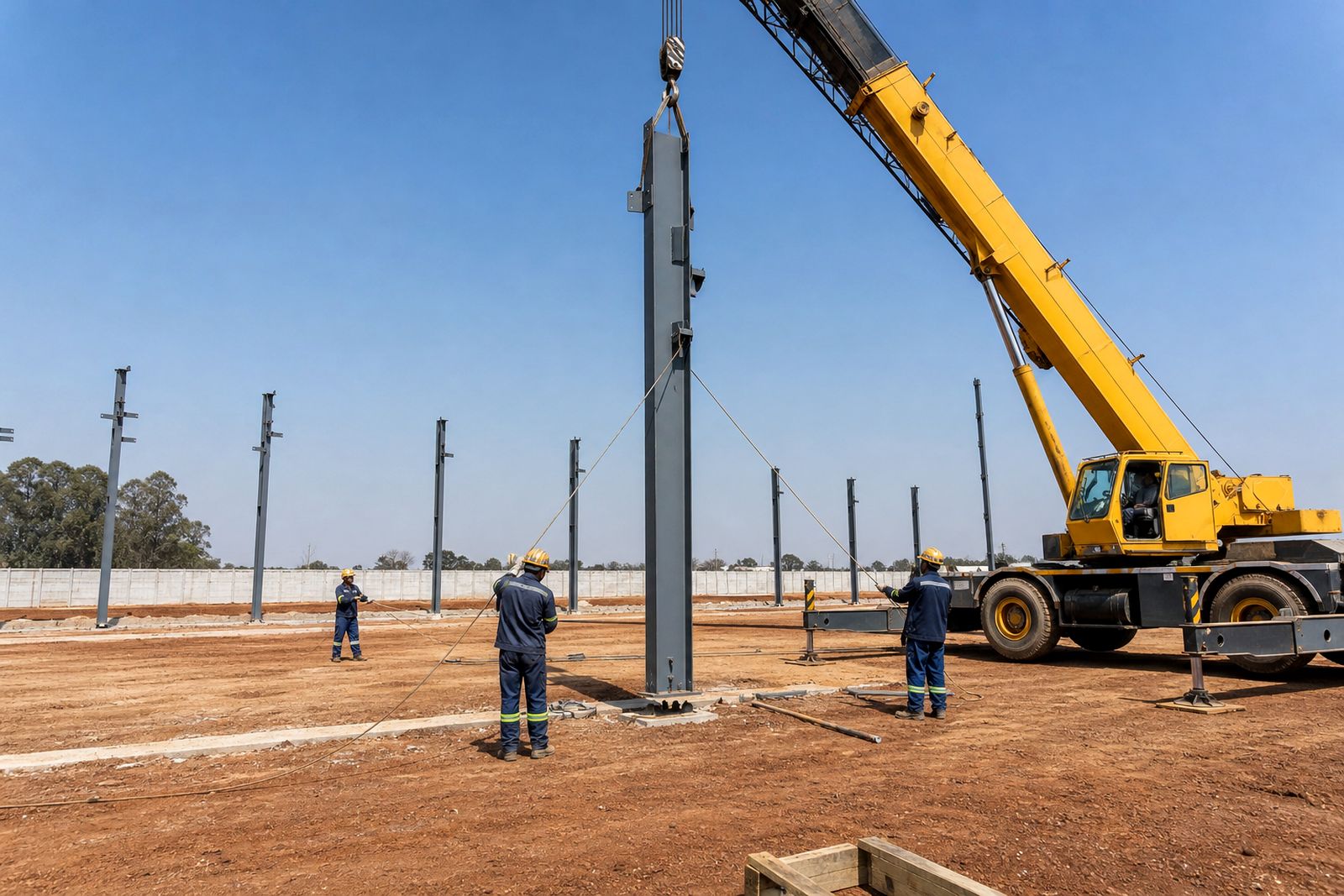
We handle on site erection of structural steel with sequencing that keeps fabrication, deliveries and installation moving in the right order. Our teams work from approved drawings and practical site conditions to erect churches, factories, warehouses, farm sheds, hangars and other steel structures across South Africa.
What is included in our site erection service
Site erection covers the organised installation of fabricated steel members on your project site, from the first offload to final alignment and bolt tightening. We coordinate around access, crane positions, foundation set out, weather exposure and the sequence needed to keep the frame stable as it goes up. This applies to new structures as well as extensions, structural alterations and mezzanine installations.
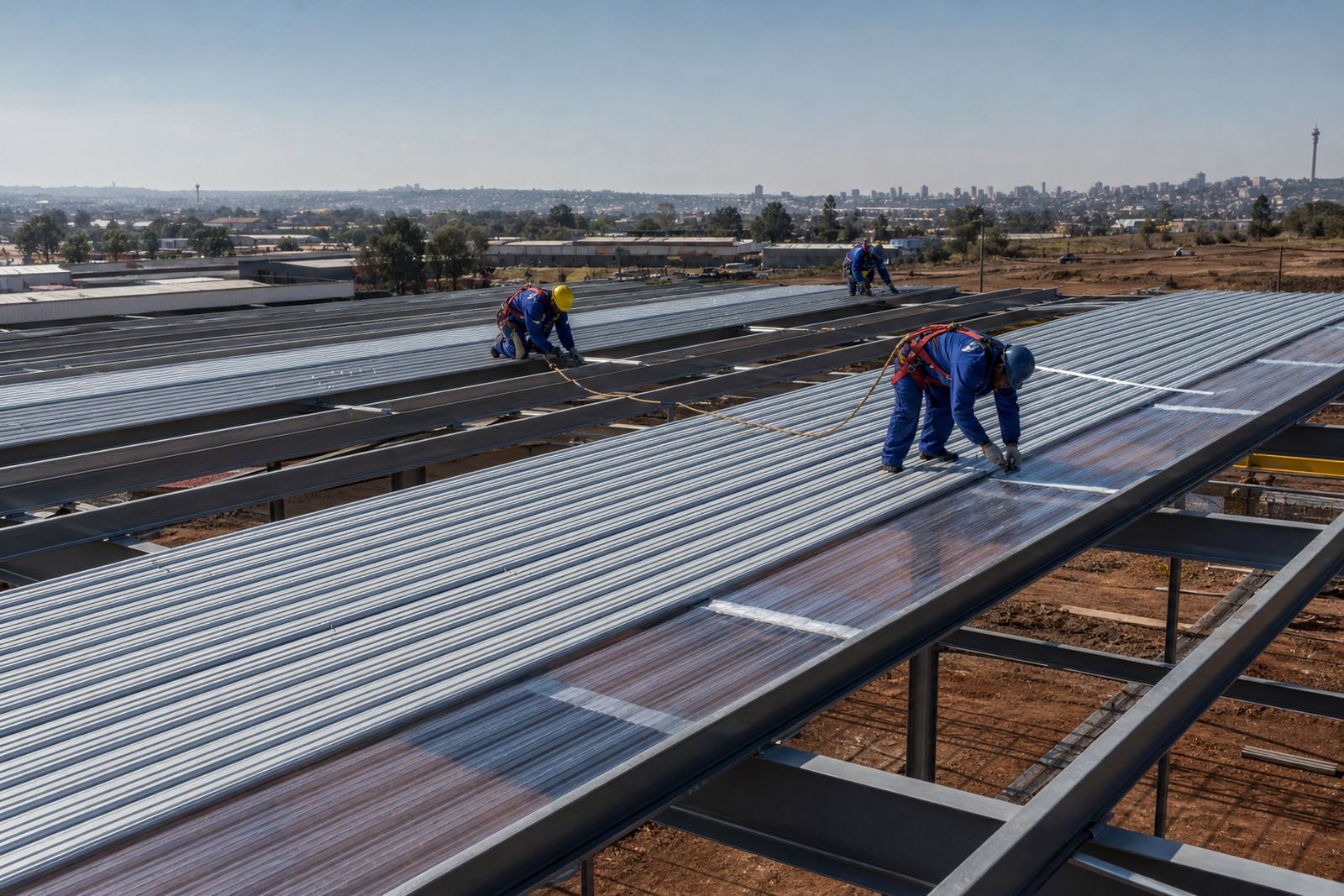
Our erection scope is planned to suit local conditions, whether the site is a busy industrial yard in Germiston, a farm with limited access roads, or a coastal area where wind and humidity affect handling and storage. If roof sheeting installation forms part of the project, that work is scheduled to suit the completed frame and purlin readiness.
- Offloading and handling of fabricated steel on site
- Erection of columns, rafters, portal frames, beams, bracing and secondary steelwork
- Placement and tightening of holding down bolts, connection bolts and specified fixings where applicable
- Frame plumbing, level checks and aligment to approved drawings
- Mezzanine support steel and platform framing where included in scope
- Coordination with sheeting, cladding or follow on trades where required
How the erection process works on site
Before the first truck arrives, we review the approved drawings, member marking schedule and erection sequence. We check that the concrete bases, anchor bolt positions and access areas are ready for installation. If the structure is being added to an existing building, we also confirm tie in points, clearances and any temporary support requirements.
The frame is then erected in controlled stages. Primary members are positioned first, followed by temporary stabilising elements and permanent bracing. Once the structure is standing true and stable, we move on to secondary steel such as purlins, girts, stair framing, landings or mezzanine members. On larger jobs this is done in sections so other site activities can continue where safe to do so.
- Pre start checks on drawings, base readiness and access
- Planned offloading and steel laydown by erection sequence
- Lifting and placing primary structural members
- Temporary stabilisation and permanent bracing installation
- Level, line and plumb checks before final tightening
- Handover of the erected frame for the next construction stage
Where power cuts affect site operations, we plan around available lifting and access equipment so the programme is not disrupted more than necessary. On exposed sites we may also adjust the daily sequence for wind conditions, especially for long rafters, sheeting packs and high level work.
What the client needs to prepare before our team arrives
Good preparation on the client side saves time and helps avoid stoppages once cranes and crews are booked. The most important items are correct concrete work, safe access and enough working space around the building line. We also need site rules and induction requirements confirmed before mobilisation.
If the site is inside an operating plant, warehouse or mine area, vehicle routes and exclusion zones must be agreed in advance. For rural projects, the road condition into site matters more than many clients expect, especially after heavy rain. A truck that cannot turn safely or a crane that cannot set up level will slow the whole job.
- Foundations completed to the required set out and levels
- Anchor bolts or cast in fixings checked against approved drawings
- Safe access for delivery vehicles, lifting equipment and erection crew
- Clear laydown area for steel members, fixings and tools
- Site induction, permits and operating rules communicated before arrival
- Water, ablutions and any required site services available as agreed
Municipal and site specific rules still apply during erection, including access control, noise limits in some areas and traffic management where work is near public roads. If another contractor is responsible for civils or concrete, it helps to close out snags before the steel arrives, not after.
General specifications and erection considerations
Each project has its own structural design and member schedule, but there are a few practical erection points that matter on most jobs. We install from approved fabrication drawings and use the connection details specified for the structure. Member sizes, bolt grades, base plate details and bracing layouts are taken from the issued drawing set, not guessed on site.
Typical projects include portal frames, hot rolled beams, channels, angles, hollow sections, roof purlins, side rails, mezzanine framing and stair supports. Steel can be supplied with shop primer or another specified finish where included, but any touch up after erection depends on the scope and site conditions. Coastal work often needs extra care on storage and handling because condensation and salt in the air can affect unprotected steel quicker than inland sites.
For roof and wall support steel, spacing and alignment are checked before sheeting starts. For mezzanines and platforms, floor loading requirements and access arrangements must be clear upfront so the supporting steel is erected in the right sequence. If there are existing structures nearby we may need a slower lift plan, but it keeps the job safe and tidy.
How pricing is worked out
Site erection pricing is based on the actual demands of the job rather than a flat rate. The biggest cost factors are tonnage, member lengths, site access, crane size, working height, complexity of connections and whether the structure is a clear new build or a modification to an existing frame. Distance from Germiston and the number of site visits required also affect the quote.
Jobs with restricted access, night work, staged shutdowns or tight live site rules usually need more planning and more time on site. Remote agricultural work may need different transport and lifting arrangements. If roof sheeting, cladding support steel or mezzanine items are included, they are measured in the relevant scope so the client can see what is allowed for. We do not publish fixed prices for erection work. Send your drawings or project details through the enquiry form and we will quote on the actual scope.
- Total steel tonnage and number of members
- Crane and lifting equipment requirements
- Site location, travel and accommodation where needed
- Foundation accuracy and readiness at time of mobilisation
- Programme constraints and phased erection requirements
- Extra safety controls for operating sites or restricted zones
Checks after erection and ongoing support
After the main frame is erected, we carry out final checks for line, level, plumb and connection completion within the agreed scope. Any obvious snags are noted and closed out so follow on trades can proceed with fewer delays. If the project includes roof sheeting installation or additional fabrication, we coordinate the handover point clearly.
For existing structures that were altered or extended, aftercare may include a return visit once adjacent work is complete, to confirm tie in areas and connection points remain as intended. Clients should also protect erected steel from site damage caused by forklifts, plant impact or unplanned drilling and cutting by other trades. If later changes are needed, it is better to ask for a proper review first than to make ad hoc site changes. A small check now can prevent a larger repair later.
What our Steel Structures customers say
Verified Google reviews
Questions we get asked
Do you only erect steel that you have fabricated?
We mainly erect steel supplied as part of our own project scope so that drawings, member marking and sequencing stay coordinated. If you have an existing project, send the details through the enquiry form and we can advise based on the information available.
Can you erect steel on an active industrial or mining site?
Yes, provided the site rules, permits, induction requirements and access restrictions are shared upfront. Active sites often need tighter planning for lifting zones, shutdown windows and vehicle movement.
What happens if the foundations are out of position?
Small issues can sometimes be managed within the structural detail, but larger errors usually need to be checked before erection continues. It is best to confirm levels and anchor positions before steel is dispatched to site.
Also worth a look
Ask for a quote
Send your building type or steel requirement, approximate dimensions and project town through the form, and the team can respond with a quote for supply, fabrication or erection.
Open the contact form