

Preparing for site erection
Good site preparation makes steel erection safer, faster and easier to control. Before columns, rafters and sheeting arrive, a few practical checks can prevent delays, rework and standing time on site.
Start with access and working space
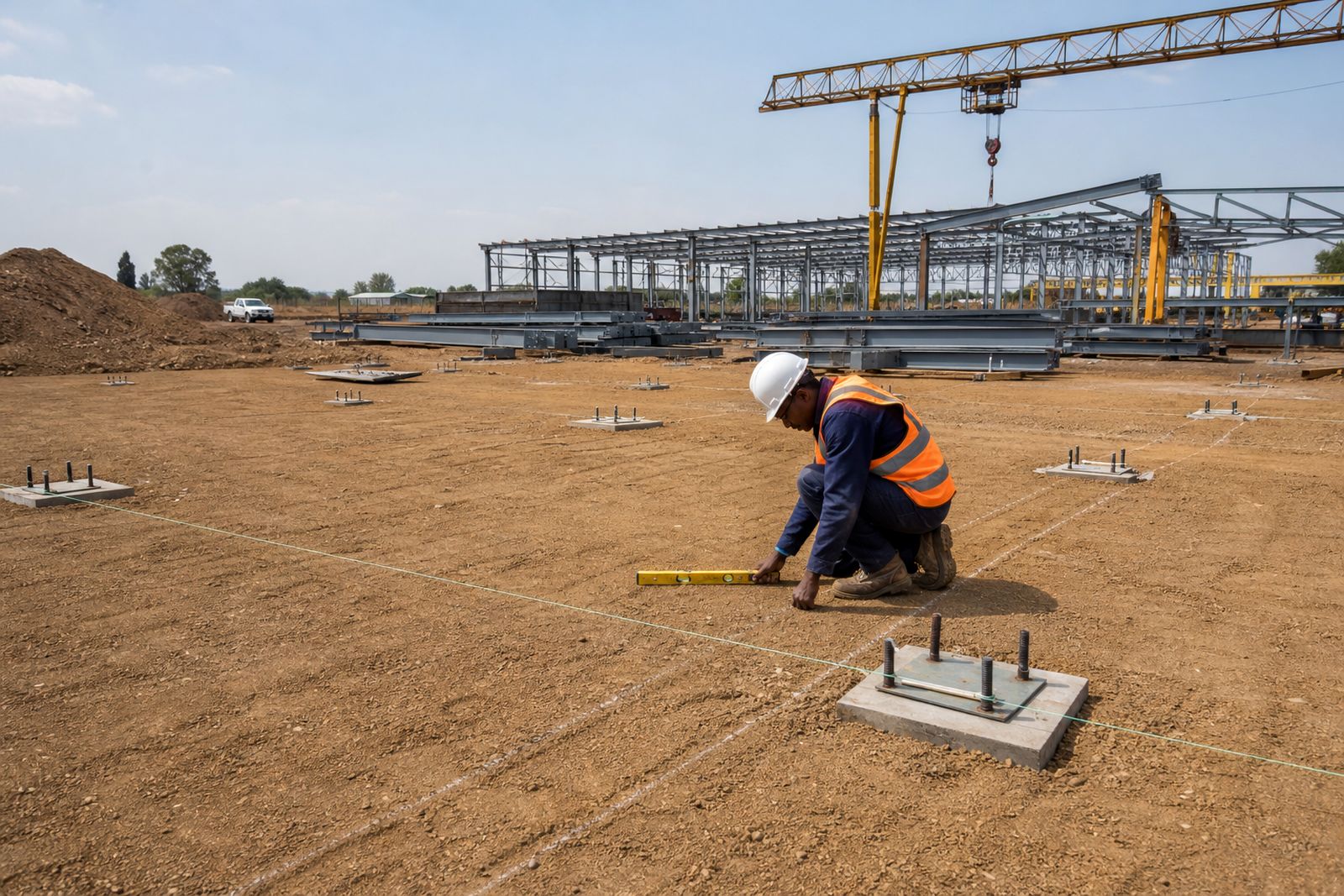
The erection team needs clear access for delivery vehicles, lifting equipment and workers moving steel members into position. A site that looks open on paper can still cause problems if the gate is narrow, turning space is tight or the ground is soft after rain. In Germiston and around Gauteng this often comes down to yard layout, boundary walls and existing buildings. On agricultural and mining sites, long gravel approaches and uneven ground can slow unloading if they are not graded beforehand.
Allow room for offloading, temporary stacking and the path of the crane or lifting plant. If steel must be carried twice because stock is placed too far from the work area, time and labour both go up. It helps to walk the route from entrance to erection point and mark any tight spots before the first truck arrives.
- Confirm gate width and vehicle turning radius.
- Check whether the road into site can carry loaded trucks in wet weather.
- Set out an offloading zone close to the erection area.
- Remove scrap, pallets, old fencing and unused equipment from the working space.
- Identify overhead lines, trees, canopies and pipe bridges that may affect lifting.
- Plan where workers, visitors and other contractors will move while erection is under way.
Make sure foundations and holding down bolts are ready
Steel erection should not start until foundations are complete, cured as required and checked against the approved setting out. The most common delay on steel jobs is finding that base positions, bolt centres or levels do not match the fabrication drawings. Even a small error at foundation stage can become a major fitting problem once columns are on site.
Before the steel arrives, verify the bolt projection above concrete, thread condition and spacing between bolt sets. Foundation tops should be clean and free of standing water, loose grout and built up mud. If there are pedestal foundations, make sure there is enough room around each one for access with tools and lifting tackle. On sites with poor drainage, sort out runoff first or the crew may spend the morning pumping and cleaning instead of erecting.
- Check grid lines, diagonals and column centres.
- Confirm foundation levels with a level instrument, not by eye.
- Inspect holding down bolts for damage, rusted threads or movement.
- Keep the latest drawing set on site for reference.
- Resolve any mismatch between civil work and steel drawings before delivery.
Plan storage, protection and material handling
Steel should not be dropped straight onto bare mud or left where site traffic can damage it. A simple storage plan helps protect members, bolts and sheeting until they are needed. Lay down sleepers or timber bearers so that steel stays off the ground and can be lifted safely by slings or a forklift. Smaller packs should be grouped by mark or by area of the building to avoid unnecessary sorting later.
Roof sheeting, bracing rods, cleats and loose connection items need particular care. If packs are left open in the weather, water can sit between sheets and cause staining. In coastal areas, salty air and humidity make proper covering more important, especially if the material will stand for a few days before installation. Keep bolt boxes dry and under control because mixed or missing fixings can hold up an entire bay.
If power cuts are common on the site, think ahead about lighting, battery charging and backup for essential tools. The erection crew can work around many site conditions but avoidable interruptions still cost time.
Confirm plant, people and safety controls
Before erection day, make sure the right lifting equipment is booked for the actual member sizes and lengths being installed. A light truck mounted crane may be fine for short members, but portal frame rafters, long beams or bundled roof members often need larger capacity and better reach. It is worth checking this early rather than trying to change plant at the gate.
Safety planning should also be practical and site specific. The erection team needs a clear method for working at height, controlling suspended loads and separating the steel work area from other trades. If there will be concrete crews, electricians or cladding installers moving through the same zone, sequence the work properly. too many teams in one footprint usually slows everyone down.
- Confirm crane size, lifting radius and ground bearing requirements.
- Check that access equipment is suitable for eaves height and roof pitch.
- Mark exclusion zones below lifting areas.
- Provide a safe place for pre start briefings and document checks.
- Make sure ablutions, drinking water and basic welfare are available on site.
- Keep first aid and emergency access routes clear at all times.
Sort out municipal, site and service issues early
Delays do not only come from steelwork itself. Local authority requirements, landlord rules, mining site controls or farm access arrangements can all affect when erection starts. If the project needs specific permits for delivery timing, road occupation, noise or access after hours, those should be in place before trucks are dispatched. On industrial sites, induction procedures and permit systems can also hold up the first day if they are not arranged in advance.
Underground and overhead services matter just as much. Confirm where stormwater lines, water pipes, electrical trenches and existing foundations run, especially if cranes or mobile elevated work platforms will travel across the site. If the ground is recently backfilled, it may need compaction or steel plates in traffic areas. These are small jobs when planned and a real headache when done at the last minute.
Use a final pre erection checklist
The easiest way to avoid day one problems is to do one final check with the site team before delivery. Walk the site with the latest drawings, look at the first bay to be erected and confirm that everyone understands the sequence. This does not need to be complicated. A short checklist used properly is usually enough to spot what has been missed.
Once steel starts arriving, decisions need to be quick. If the site is prepared, the crew can unload, set out and begin erection without wasting half the shift on preventable issues. That keeps the programme tighter and helps other trades follow on in the right order.
- Access road clear and suitable for deliveries.
- Offloading and stacking areas marked.
- Foundations checked for line, level and bolt position.
- Drawings available on site and current.
- Lifting plant booked and confirmed.
- Safety controls, inductions and exclusion zones ready.
- Loose items, fixings and sheeting storage protected from weather.
- Drainage, mud and water issues dealt with before arrival.
If you are unsure what to prepare for a church building, warehouse, factory or farm shed, send the project details through the contact page and we can advise on the practical site requirements before erection starts.
What our Steel Structures customers say
Verified Google reviews
Questions we get asked
How early should the site be ready before steel delivery?
Ideally all access, foundation and storage checks should be completed before delivery is booked. That gives enough time to correct bolt positions, improve ground conditions or clear working space without delaying the erection crew.
Can steel be erected if the foundations are slightly out?
Small issues can sometimes be corrected, but erection should not rely on site fixes for poor setting out. If bolt centres, levels or grid lines are wrong, it is better to sort them out first than force members into place and create bigger alignment problems.
What is the most commonly missed site preparation item?
Access and working space are often underestimated. Trucks may fit through the gate, but turning, offloading and crane setup can still fail if there is not enough room or the ground is too soft.
Ask for a quote
Send your building type or steel requirement, approximate dimensions and project town through the form, and the team can respond with a quote for supply, fabrication or erection.
Open the contact form